Travel Notes
A Slow Stay in Shimla: Mornings, Mist, and Mountain Views
Discover why a slow stay in Shimla is the perfect way to experience the mountains, from misty mornings and leisurely breakfasts to rainy afternoons and firelit evenings.
There is a particular kind of silence that only exists above seven thousand feet, and Shimla keeps a generous supply of it. It is not the silence of emptiness. It is the silence of a place that has already seen everything you are about to feel, and is waiting, quite patiently, for you to catch up.
You feel it first on the drive up, somewhere past the last dhaba with its steaming glasses of tea, when the road begins to fold back on itself and the pines close in on either side like they are letting you into something. By the time the mist starts brushing against the windows, you have already begun, without quite noticing, to breathe differently.
The Morning You Stop Checking the Time
Somewhere, an alarm is going off.
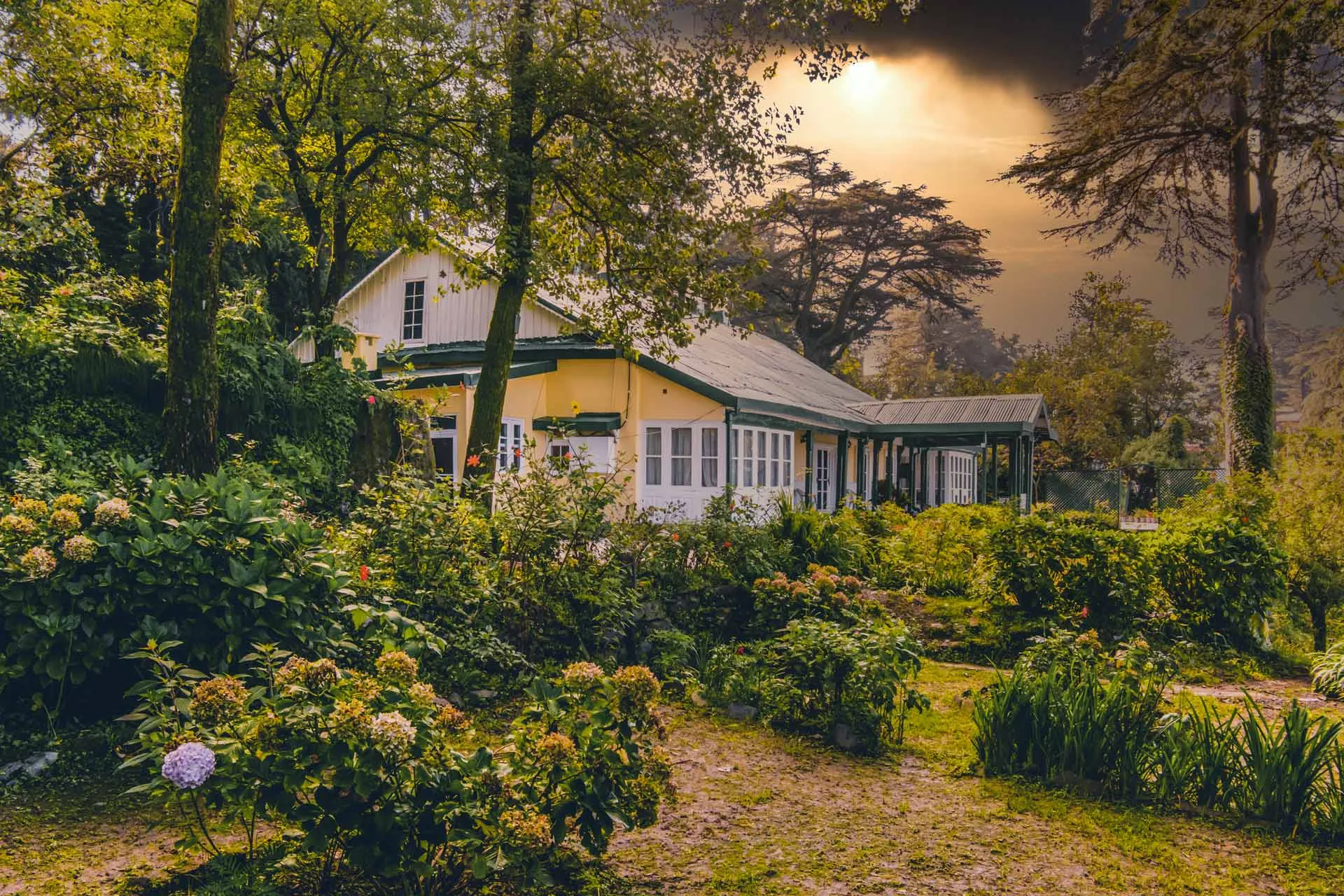
Mornings in Shimla arrive the way they are meant to, unbothered by schedule, announced only by light finding its way across a wooden floor and a valley slowly deciding to reveal itself outside the window. There is a version of this town built for early trains and full itineraries, and there is another version, quieter and far more rewarding, built entirely around the decision to simply wake up and watch.
A balcony helps. So does a blanket still warm from the night before, and a window that frames the deodars without asking anything of you beyond attention. Breakfast, when it finally happens, is never rushed. It stretches the way good mornings do here, tea refilled without being asked, the valley changing colour in the time it takes to finish a single cup.
Mall Road, and the Town That Refuses to Hurry
By the time you step out, the town has already been awake for a while, though it never seems to be in any particular rush about it either. Mall Road unspools ahead of you in that unmistakable Shimla rhythm, part promenade, part living room for the whole town, where a porter shoulders a wooden crate uphill with the quiet ease of someone who has walked these slopes a thousand times.
Christ Church watches over all of it from the Ridge, mustard yellow and patient, throwing patches of stained glass colour across its walls whenever the sun agrees to show up. Walk a little further and Jakhu Hill rises above everything, its temple and its resident langurs keeping watch over a view that empties the mind of whatever it was carrying before the climb.
If you arrive in April, you will find rhododendrons blazing red against slopes that were bare a month earlier, and the deodars giving off that first resin smell of the season. By June, the same slopes have gone a deeper, thicker green, and Mall Road stays busy well past the hour it usually empties, tourists slowing their pace one shopfront at a time, as though the town itself were teaching them how to walk. Even in the crowd of high summer, Shimla never seems to surrender its unhurried pace. Sunlight filters through wandering clouds, catching weathered stone, shopfronts, and pine tops before slipping away again.
What the Rain Does to a Room
Ask anyone who has spent real time in Shimla, and they will tell you the town saves its best secret for the season most people try to avoid.
When the monsoon arrives, the valley disappears into itself. Clouds roll in low and thick, swallowing hillsides whole, and somewhere a tin roof begins its long conversation with the rain, a steady drumming that turns any room into the coziest place on earth. This is when a window seat becomes the only appointment worth keeping.
A book left half read since Tuesday finally gets picked back up. Tea gets poured a second time before it has properly gone cold. Somewhere below, a shopkeeper pulls down a tarpaulin over unsold umbrellas, resigned. The window fogs slightly at the edges, and through the clear patch in the middle, the world outside has turned entirely to grey and silver.
There is a particular comfort in being warm and dry while the whole world outside has gone soft and grey. It asks nothing of you. It only asks that you stay a little longer than you meant to, which, in Shimla, always turns out to be the right decision.
Evenings Built Around a Fire
As the light fades, and it fades early and beautifully here, the town settles into its other great specialty: the art of the unhurried evening.
Somewhere between the last walk on the Ridge and the first proper chill of the night, a fire becomes less a feature of a room and more its quiet centrepiece. Chairs get pulled a little closer. Something warm gets poured. Conversation, when it happens, tends to slow down to match the crackle in the room, and when it does not happen, that is fine too, because Shimla is equally generous to comfortable silence.
Winter turns it into something closer to ceremony. Frost gathers on the windowpanes while the room stays low-lit and warm. Outside, snow settles over rooftops, the pines grow still beneath its weight, and somewhere in the distance the Kalka–Shimla Railway makes its slow, familiar journey through the hills, as though keeping time with the mountains themselves.
The Valley Has the Last Word
Here is the thing about Shimla that no brochure quite manages to say properly. It is not really a place you visit. It is a place you slow down inside, until slowing down becomes the whole point.
You will remember the obvious things, the Ridge at golden hour, the church bell marking an hour you were not watching for, the first snow on a rooftop. But you will also remember the smaller things far longer than you expect to. The particular quality of light on a balcony at seven in the morning. The sound of rain finding a tin roof for the first time in a season. A breakfast that had no reason to end when it did, and so simply did not.
Come for the views, if that is what first draws you here. But stay, and let a morning stretch a little longer than planned, let an evening gather itself around warmth and quiet, let a window become your favourite seat in the house. Shimla has never been in a hurry to impress anyone. It has always preferred, instead, to be lived in slowly, one unhurried hour at a time, until you find yourself, quite without meaning to, having fallen for it completely.
Written by
Agrima Mehta
Come Stay a While
Rose Cottage, Shimla and Springfield, Kasauli are family-owned heritage homes built for exactly this kind of unhurried mountain morning. Plan your own slow stay in the Himalayan foothills.